

At some point you've probably padded downstairs at 2am for a glass of water and felt, just for a second, that the house belonged to no one. Everything still. Everyone asleep. Just you and the building, doing nothing in particular in the dark.
Except your house is never actually off duty.
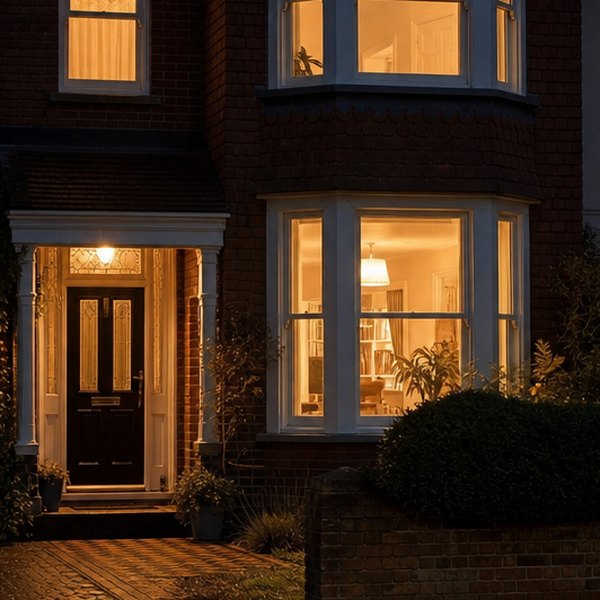
Right now, behind the plasterboard, something is carrying a regulated load. The wires in your walls are sized to a specification drawn up by people who spent years arguing about tolerance thresholds in committee rooms. The joists under your floor were approved against a standard that existed long before you moved in and will outlast you. None of this is inert. It's live, in both the electrical and legal sense, and it doesn't care what time it is.
The Shadow Document Behind the Bricks
When a house is built or significantly altered, it has to pass through building control – a process most people file under "stuff that happened before I owned it." What building control actually does is bind a set of legal obligations to the physical fabric of the structure. Your walls don't just hold the roof up; they hold the roof up in a way that satisfies Part A of the Building Regulations. Your bathroom extraction fan isn't a bonus; it's Part F. Every room is, in a mild but genuinely meaningful sense, a piece of paperwork that happens to be made of timber and plaster.
This is the shadow version of your house. It follows the physical one everywhere.
The 3am Reading Party
When something goes wrong in the small hours – a pipe bursts, a window shatters, a structural crack appears that wasn't there yesterday – the people who come to deal with it are not just tradespeople. They are, whether they'd put it this way or not, readers. An emergency glazier deciding whether to board up or replace is checking your window against current safety glazing standards. A plumber tracing a leak at 3am is working through a system that has to comply with Water Regulations 1999, whether your house was plumbed by a conscientious professional or a bloke called Gary who did it as a favour in 1987.
They are reading your house as a document. And occasionally finding the earlier drafts were a bit optimistic.
The People You'll Never Meet Unless It All Goes Wrong
There is a whole category of professional that most homeowners only discover in a crisis: the structural engineer who can tell from the angle of a crack whether a wall is settling normally or doing something much more interesting, the on-call building inspector, the loss adjuster quietly cross-referencing your roof construction against the standard it was supposed to meet.
For anyone curious about the way objects – buildings, transport, art – carry hidden histories and obligations they don't announce, How the Lorry Made Fine Art Affordable is the kind of article that pulls on a similar thread.
What a House Is
The useful thing to understand is that ownership and responsibility don't overlap as neatly as you might think. You own the building, but the obligations baked into it belong, in different proportions, to the original builder, every tradesperson who's ever touched it, your local authority, the insurance company, and whoever drew up the regulations in the first place. When it all works, you just have a house. When something breaks at 3am, you discover, briefly, that you've been living inside a quite complicated piece of administered infrastructure all along.
It's still your home, of course. It's just also a regulated object with a night shift.
Questions this raises
- How often do British building regulations change?
- Who checks that an older house still meets standards?
- Does old wiring legally have to be updated?
- What standard are domestic floor joists designed to?