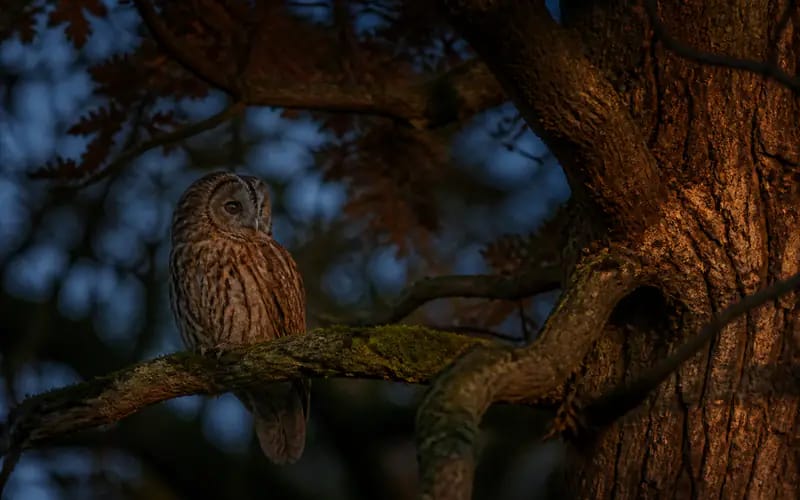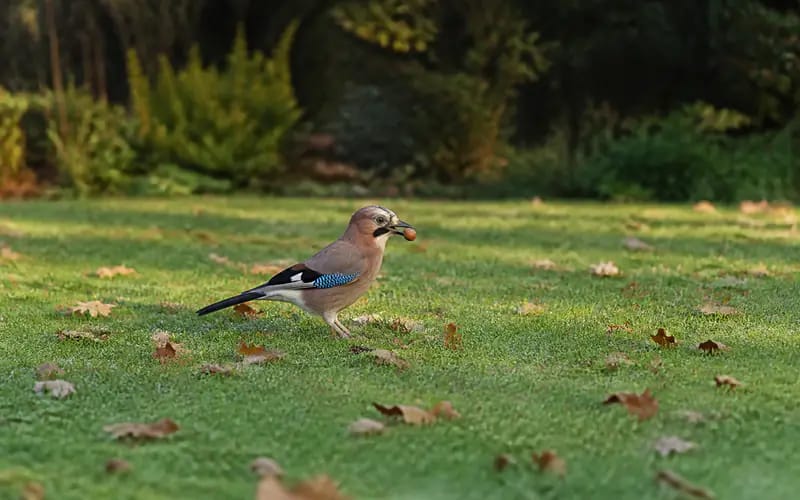
On a still morning in May, if you open a window about an hour before sunrise you should be able to hear the dawn chorus starting from virtually nothing. One bird starts to sing in the dark and is answered by another, and within half an hour the garden, park or wood is filled with the sounds of birds singing over each other. The sounds of British wildlife don’t get much more familiar than this, and this one doesn’t require any equipment to enjoy. This guide describes what the dawn chorus is, explains why our birds start to sing at dawn and tells you when you can expect to hear them at their best. It also starts to teach you to recognise the individual birds by their songs.
What the dawn chorus is
The dawn chorus event is the short-lived increase in birdsong that builds up over the hour or so before sunrise and then tails off slowly afterwards. This event occurs to some degree all year and is at its strongest during spring and early summer when birds are territorial and breeding. In Britain the event typically occurs from March to July and is at its peak in May and June according to the Woodland Trust.
Most of what you hear during the chorus is going to be song rather than calls. A bird’s calls are generally short and can be heard all year and are used for contact as well as for alarm. A bird’s song is longer and more complex and in most British species is generally used by males for territory and for attracting and keeping a mate, and therefore it is generally associated with the bird’s breeding season.
Why birds sing at dawn: territory, mates and the physics of still morning air
There is no single explanation for dawn singing, and scientists are debating the relative weight of several theories.
The first explanation for dawn singing is territory, followed by mates and opportunity. The early morning song can announce that a male has survived the night and still holds his territory, so other males are less likely to move in. Because song costs energy, a long, loud performance can also advertise a male’s condition to potential mates. Finally, early morning singing is opportune because it is too dark to be searching for insects and time is being utilised productively.
It’s also physics. The early morning is usually cool and quiet, often still. There’s less wind and less background noise from traffic and human activity. The Woodland Trust explains that sound can travel around 20 times further than normal at dawn. So a song that is sent out at dawn will reach more listeners.
When to hear it: the season and the best hour
The fullest choruses are on calm, dry mornings between late April and early June. Wind and heavy rain affect the birds’ singing and our ability to hear them.
It’s actually surprisingly important to time your visit. The first birds start singing about an hour before sunrise, and by about half an hour before the sun rises the whole chorus is usually singing at its fullest and can continue for about half an hour after. Check the time of sunrise for where you live the night before and get up about an hour before to hear the birds from a window or from outside in the morning. In southern England in May this can mean getting up by about 4 am, and even earlier in Scotland where the time of summer sunrise is earlier.
You don’t have to travel to find a chorus. Gardens, parks, churchyards and the edges of woods all have a mixture of species. Even a quiet suburban street can be surprisingly rich, and for a first attempt a smaller area is often easier to deal with than a large wood with more species to identify.
The first singers: robin, blackbird, song thrush and wren
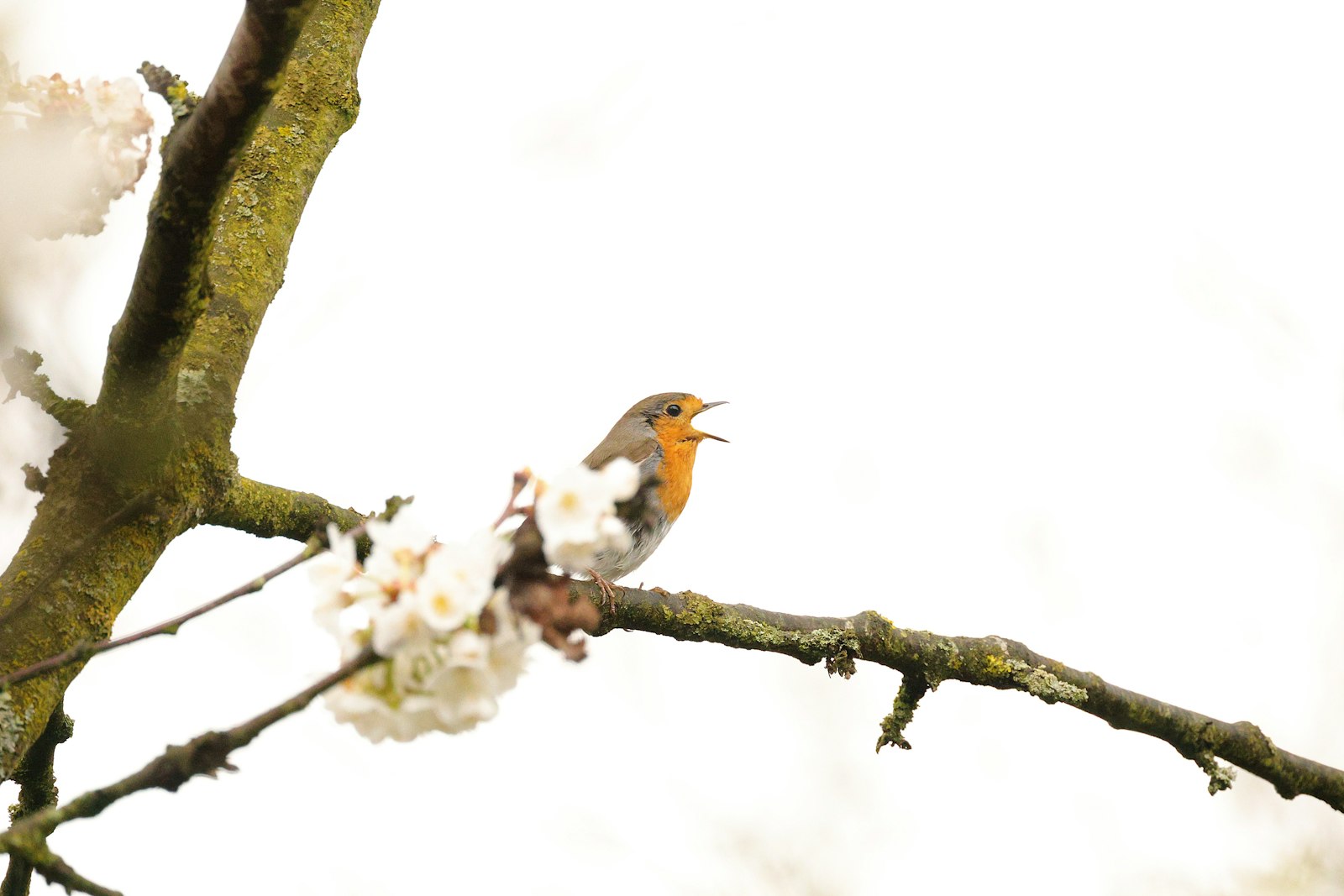
Most species of birds join in the chorus in a rough order, and the early starters are characterised by relatively large eyes and how well they can see in low light. Larger-eyed species such as thrushes and robins are generally the first to start up, followed by smaller seed-eating birds such as tits and finches once it is light enough.
The song of the robin, often the first voice you hear, is a thin, wistful warble made up of short phrases that ascend and then descend in short order. It contains many changes of pitch and there are often pauses between phrases. The robin is one of the few species to sing in the autumn and winter months, and so is sometimes heard in December.
The blackbird sings a rich, slow, fluting song. It is delivered in a relaxed and almost conversational style. The end of each phrase tends to fade away on a series of softer, scratchier notes.
The song of the song thrush is the easiest one to recognise of all the early singers. The singer repeats every phrase, usually two to four times, before going on to the next one. The singer delivers loud and clear phrases, some of which sound almost like words.
The wren is a small bird but it has a huge song. The song is fast, insistent and loud. It is made up of a rapid succession of notes and trills, often including a hard, dry trill in the middle of the song. The bird sings as if it is in a hurry.
| Bird | When it usually joins | What the song sounds like | Listen for |
|---|---|---|---|
| Robin | Very early, often before first light | Thin, wistful warble of short phrases | Changes of pitch and pauses between phrases |
| Blackbird | Very early | Rich, slow, fluting phrases | A relaxed pace and a scratchy fade at the end of a phrase |
| Song thrush | Very early | Loud, clear phrases | Each phrase repeated, usually two to four times |
| Wren | Early | Fast, loud burst of notes and trills | A hard, dry trill in the middle |
| Great tit | Once there is more light | Simple two-note phrase | The repeated “teacher, teacher” pattern |
| Chaffinch | Once there is more light | Short descending run of notes | A flourish at the end, repeated again and again |
How to identify bird song by ear: rhythm, pitch and repetition
Rather than memorising sounds of a particular song, we focus on a few key features when learning bird song. What three questions would you ask of a new song to better learn it?
First, is the song’s rhythm a steady repeated pattern, a fast tumble of notes, or slow phrases with pauses between them? The slow phrases of the blackbird are very different from the fast scurrying of the wren.
Secondly, what is the pitch and tone of the song? Is it sung in a high thin voice, like the robin, or perhaps in a low, fluting voice, like the blackbird? Or could it be harsh and scratchy, pure and whistled, or buzzy or rattling?
Does it repeat? The repetition in a song can be very helpful. The song thrush repeats each phrase; the chaffinch’s song is a short descending series of notes, repeatedly sung and ending in a flourish; the great tit’s song is a simple two-note series, repeatedly sung, that many people hear as “teacher, teacher”.
Start with one or two species and learn them well before you move on to more. Once you have the blackbird, robin and song thrush under your belt, the rest of the chorus will usually start to reveal individual voices from the general chorus of birdsong.
Using apps and recordings responsibly
When you start bird watching, a sound identification app can be a great help, as it suggests which bird might be singing a certain song after you have recorded it, and many beginners use these tools to check their guesses for unknown birds. The apps may mistake a bird singing in the distance for another one and also get confused by birds singing at the same time as well as by background noise. So treat the app’s suggestion as a starting point rather than an answer, and check whether the species suggested for a recorded sound really is found in that habitat and at the time of year when you heard the birds singing.
Recordings are also good for learning at home. Even playing a few of the well-known songs before you go for a morning walk can help you to recognise them when you are out. However, playing recordings of birds in the field should be done with care. Playing the song of a particular species can give the impression of an intruder. Repeated playback during the breeding season could also cause disturbance to birds trying to defend their territory and to feed young.
Why some birds sing at night (and street lights)
If you hear a bird singing in the town at night, it is very likely to be a robin rather than a nightingale. The nightingale is a scarce summer visitor found mainly in parts of the south-east of England whereas robins are found in most parts of the country and are common.
Many believe that night singing by robins is caused by street lighting, but research in Sheffield suggests that noise may play a greater role. In 2007 researchers found that night-time singing by robins occurred more frequently in areas where there was high daytime noise and that light at night time was a much weaker predictor. In noisy environments birds may move some of their song to what is perceived to be a quieter hour of the night and have their songs drowned out less frequently. It is also possible that in addition to noise, urban birds may also be affected by artificial light and this is an area that is currently under investigation.
How the chorus is changing: declines and what the surveys show
For many once familiar species of birds, their song is now heard less often in the dawn chorus. Some species that were once common have plummeted in numbers over the last few decades. The UK’s Birds of Conservation Concern assessment has listed the house sparrow and starling as Red List species, of highest conservation concern. Several songbirds from farmland and woodland have also declined sharply.
A large proportion of data on bird populations comes from volunteers. The Breeding Bird Survey, a project by the British Trust for Ornithology (BTO) and others, relies on thousands of volunteers walking the same routes across the country each spring and noting what they see and hear. Early starts to go birding can be repaid by helping to determine whether species are increasing or decreasing in number, by contributing to schemes such as this in your local area.
International Dawn Chorus Day and how to take part
International Dawn Chorus Day is held on the first Sunday in May. It was originally a local event in Birmingham started by broadcaster and naturalist Chris Baines. It was then taken up by the Wildlife Trust for Birmingham and the Black Country and is now celebrated by participants in many countries.
On the day, local wildlife trusts, nature reserves and birding groups often run guided early-morning walks. These are the easiest way to learn from a guide, but if you cannot join one, local gardens and parks can serve as well. Set your alarm and go out into the garden or local park at dawn. For later reference, note down your observations in the form of a description of what you heard, even if you don’t know a single bird’s name. “Slow fluting song from the tall tree” is a note you can check later.
Making your garden better for songbirds
A garden that supports songbirds throughout the year results in a more lively chorus in the spring. Birds require food, water, shelter and safe places to nest.
Native shrubs and hedges such as hawthorn, holly and blackthorn provide birds with cover and nesting sites and offer berries in the autumn. Long grass on parts of the lawn and leaf litter under hedges can also support the variety of insects that many songbirds use to feed their young. Cleaning the bird feeders and providing fresh water also helps in winter. Songbird nest boxes of the correct size and position can also be put up to make up for a shortage of natural holes.
It is also wise to avoid some gardening at times when birds are breeding. The main nesting season runs roughly from March to August, so try to avoid cutting hedges and clearing dense shrubs during this time. Under the Wildlife and Countryside Act it is an offence to intentionally take, damage or destroy the nest of any wild bird while it is in use or being built.
Checklist: your first dawn chorus walk
- Check the sunrise time for your area the night before.
- Pick a calm, dry morning between late April and early June.
- Choose a nearby spot: your garden, a park, a churchyard or the edge of a wood.
- Be in place about an hour before sunrise and dress for a cold start.
- Listen for the first singer and note the time it starts.
- Learn one song properly, such as the robin or blackbird, before adding others.
- Note rhythm, pitch and repetition for anything you cannot name.
- Use an app to check your guesses, not to replace them, and do not play songs to the birds.
- Write down what you heard and compare it with recordings at home.
More about British wildlife on Trivial Mouse
- The Part of Birdsong You’ve Never Actually Heard
- The Boom That’s Quietly Terrible for Wildlife
- The Most Expensive Free Thing in Britain
- Every Living Thing Has a Label (And It’s More Like a Tin of Beans Than You’d
FAQ
What time does the dawn chorus start?
The first birds usually begin singing about an hour before sunrise, and the chorus is at its fullest from roughly half an hour before sunrise to half an hour after. The exact time depends on the date and where you are in the country.
What month is the dawn chorus best?
You can hear a dawn chorus from about March to July, but it is strongest in May and early June, when most resident birds are breeding and summer visitors have arrived.
Which bird starts the dawn chorus?
In most British gardens the robin or the blackbird is the first to sing, followed closely by the song thrush. Wrens join early, and smaller birds such as tits and finches usually start once there is more light.
Why is a robin singing at night?
Robins in towns and cities often sing at night. Research in Sheffield found that this happens most where daytime noise is high, which suggests the birds are moving some of their singing into quieter hours.
How can I learn to identify bird song?
Start with a few common species such as the robin, blackbird and song thrush, and listen for rhythm, pitch and repetition. Recordings and identification apps help, but going on a guided walk with an experienced birder is one of the quickest ways to learn.