

Most explanations of compound interest come with a picture. A curve that swoops upward. A table with numbers marching across columns, each one a bit bigger than the last. And if that picture clicks for you, great – you're done. But if it doesn't click, if charts are hard to read or numbers in rows just sit there not meaning anything, then the standard explanation of one of the most important ideas in personal finance has essentially been withheld from you. Which seems a shame. You don't actually need the picture at all.
Try this instead.
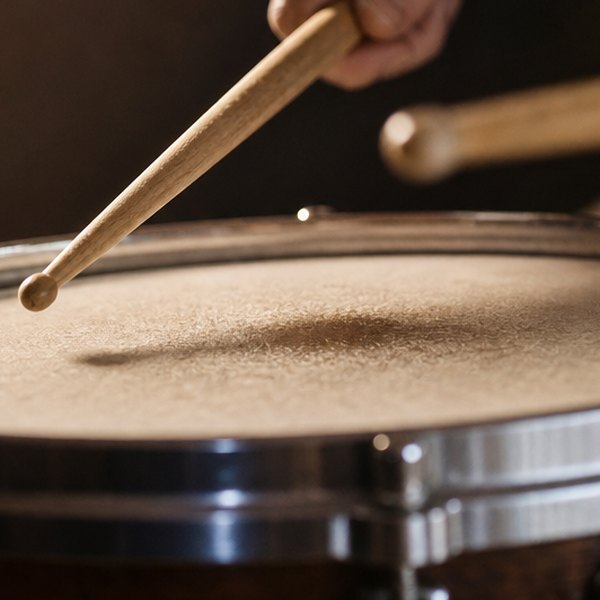
The Drumbeat That Keeps Accelerating
Imagine a drumbeat. A very slow one, one beat every few seconds. Now imagine that each time the drummer strikes, the next beat comes slightly sooner – not a lot sooner, just a little. At first you barely notice. The rhythm still feels roughly steady. But keep listening, and a few minutes in, something has shifted. The beats are coming quicker. Then quicker still. You didn't feel the change happening, but now it's undeniably happening – and the rate of change is itself changing.
That's compound interest. Not a shape on a graph. A thing you can feel in time.
When your savings earn interest, that interest gets added to the pot. Next time the interest is calculated, it's calculated on the bigger pot – the beat comes a tiny bit sooner. Then sooner again. Each cycle feeds the next one, and the cycles start arriving faster than they did before. The money is literally learning to earn more money by practising.
The Sentence That Keeps Growing
There's another way to feel this through language. Think of a sentence that keeps adding to itself: "He saved a pound, which earned a penny, which became part of a pound and a penny, which earned a slightly larger penny, which became part of the next sum, which then earned more again…" The sentence doesn't suddenly leap. It just accumulates, clause by clause, and somewhere in the middle you realise it's become something considerably larger than the thing it started as.
This is also why time is the main ingredient. Leave the sentence going for ten years and it's a complicated, substantial thing. Leave it going for thirty and it's enormous. Start late and it never quite gets going – the rhythm never has enough time to really accelerate.
For a wider look at how abstract ideas can be understood through feel and rhythm rather than visual diagrams, *The Knowledge That Lives in Your Hands* at trivialmouse.co.uk is worth your time.
The Number That Matters Most Is Not the Rate
People tend to fixate on the interest rate – 3%, 5%, 7%. Understandable. But the rate is just the speed of the first few beats. What determines the final size of the thing is how long you let the beat run. A lower rate over a long time will, in most cases, leave you with more than a higher rate over a short one. The acceleration needs room to do its work.
Which is why the most useful thing anyone can tell a twenty-five year old isn't "find the best rate". It's "start the drumbeat now and then leave it alone".
Questions this raises
- How long does money take to double at five percent?
- Does compound interest work the same way on debt?
- What is the difference between AER and a flat rate?
- Can small monthly savings catch up with a lump sum?